SARB – Currency Museum – Pretoria
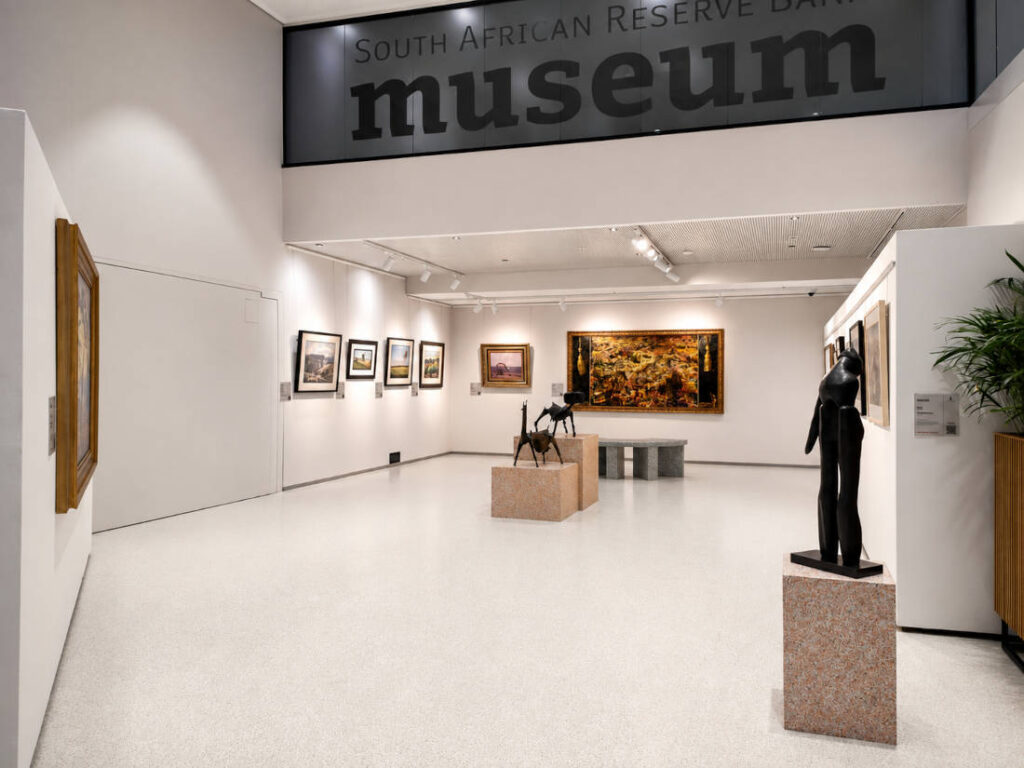
Creative audio production and system design across a major new permanent museum in Pretoria.
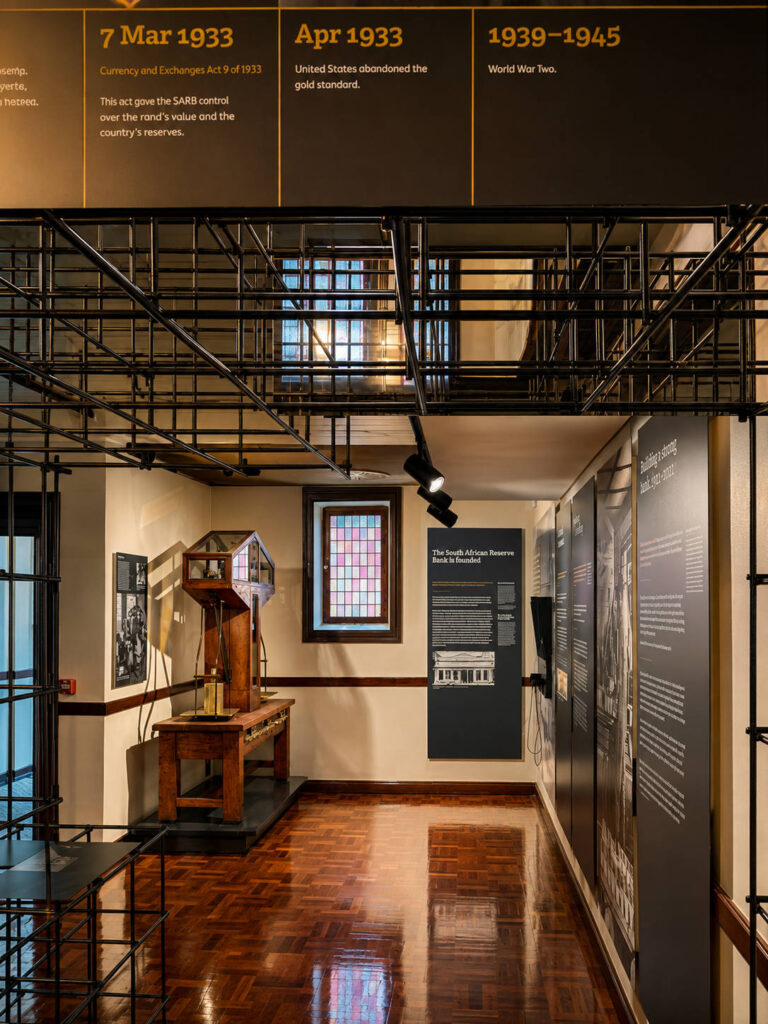
Officially launched by President Cyril Ramaphosa in June 2026, the South African Reserve Bank Museum traces 75 000 years of economic history. Its galleries move from early systems of exchange and regional trade to formal coinage, the establishment of the Bank in 1921 and its role in democratic South Africa.
Resonate developed the creative audio across the museum’s films, historical galleries and interactive exhibits. The commission included a cinematic opening film, multichannel gallery soundscapes, a 36-minute choral work for a preserved heritage church, an interactive monetary-policy game, responsive spatial audio and sound for the Young Learners Space.
Work began in 2024 and covered the complete audio-production process. This included creative direction, original composition, location and studio recording, voice production, sound design, spatial mixing, interactive audio, playback design and technical coordination.
The creative and technical work was developed together. Musical structure, loudspeaker placement, spatial behaviour, interactive logic and networked playback all had to respond to the specific architecture and visitor experience of each room.
The result is not a single museum soundtrack applied across different spaces. Each environment has its own musical, acoustic and technical character, from intimate material recordings and localised interaction to large-scale cinematic and spatial systems. These distinct environments are connected by a shared language of material, memory, exchange and value.
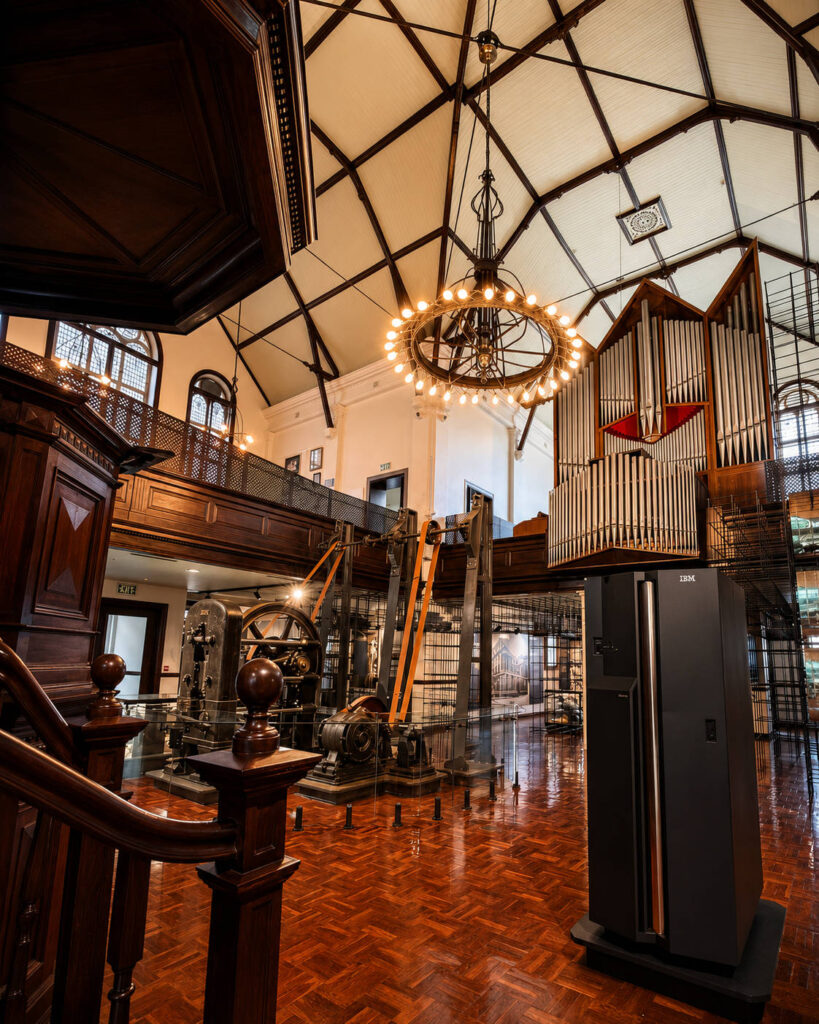
This section of the museum is housed within a former Netherdutch Reformed Church, completed in 1905 and declared a national monument in 1980.
Its centrepiece is Oom Paul, an operational minting press manufactured in 1891. The machine produced more than eight million coins, including South Africa’s first decimal 1c coin and the first Krugerrand. President Cyril Ramaphosa used the press to mint a coin during the museum’s official launch.
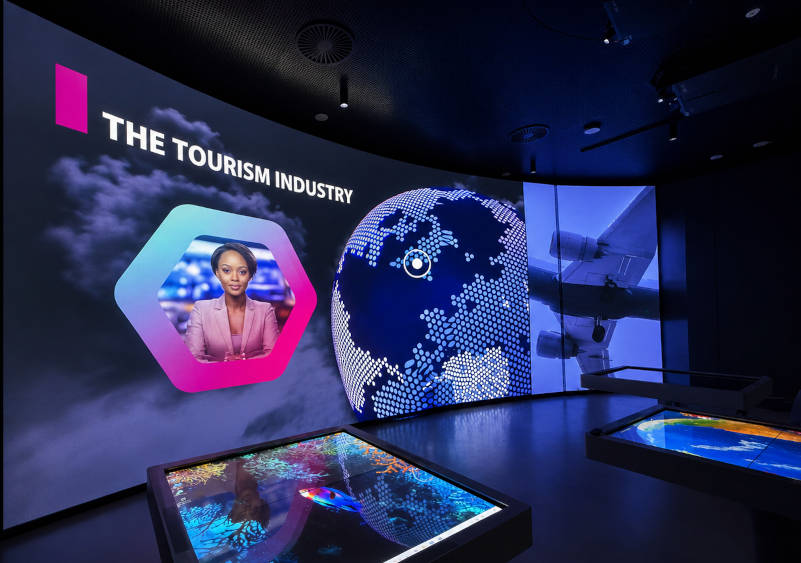
Set the Rate turns monetary policy into a physical, social game.
The sound system combines a room-scale surround score with localised audio at each player table. Presenter voice, expert commentary, voting cues and results stings build anticipation while keeping the rules and outcomes clear.
The score draws on amapiano, using log drums, percussion and contemporary South African rhythmic language. A separate theme was written for the Governor, giving his arrival a more formal musical identity.
The museum’s main film introduces money through human experience rather than policy alone.
Its soundtrack combines original music, detailed sound design and real voices within an enveloping cinematic mix. The audio moves between public history and private reflection, exploring money as currency, labour, memory, anxiety, trust and collective imagination.
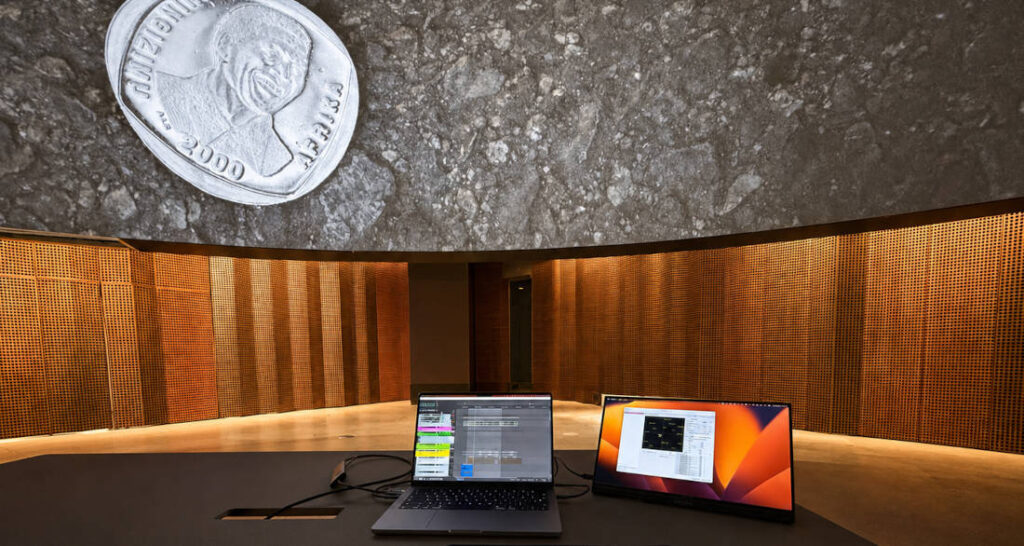
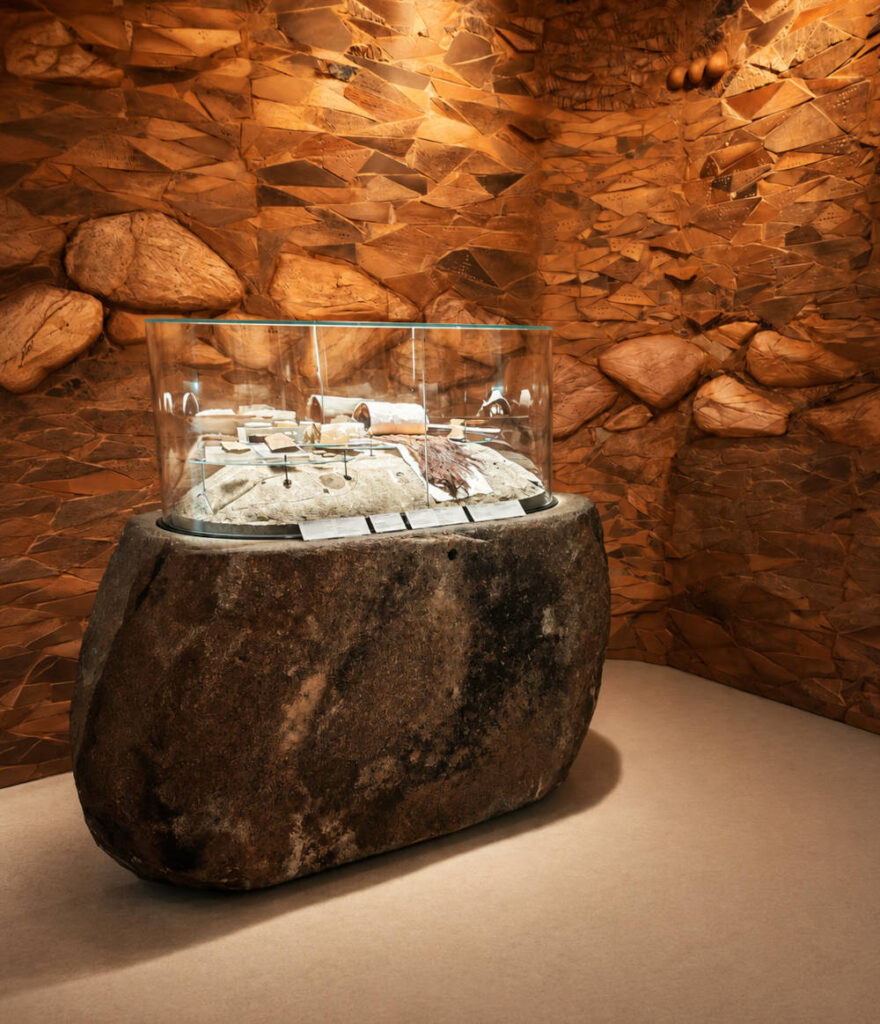
The Origins gallery moves back through the early economies of Southern Africa, when value was closely connected to land, movement, material skill, social relationships and exchange.
The soundscape is built around original landscape and environmental recordings made in the Mapungubwe region. These give the room a direct acoustic connection to place, grounding the exhibition in real environments rather than a generic interpretation of the past.
The gallery’s natural films are integrated into an evolving spatial composition. Their sound does not operate as a series of isolated film soundtracks. Instead, image, music and environmental material flow into the wider gallery, allowing visitors to enter at any point without encountering an obvious beginning, ending or repeated loop.
Dry earth and stone textures, wind, breath, distant natural activity and low resonances gradually shift in density, scale and position. At times the room feels intimate and close; at others it opens into a much larger sense of terrain and distance.
The audio is distributed across loudspeaker arrays at ground, mezzanine and ceiling level, with low-frequency extension adding physical depth. Sound can move around and above the visitor, creating vertical as well as horizontal space and connecting separate exhibition elements within one immersive environment.
The result is a gallery that feels continuously alive. Film sound, environmental recordings and musical material form a single evolving soundscape, giving the history presented in the room a strong physical and emotional sense of place.
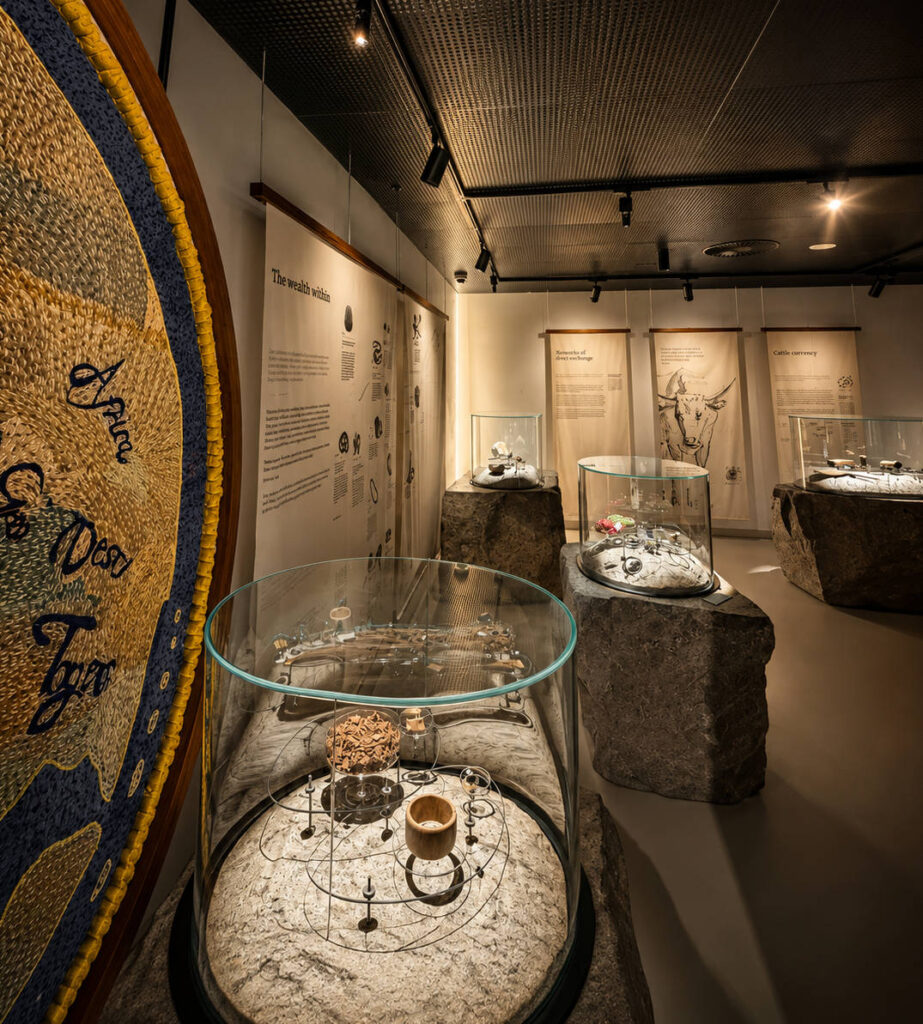
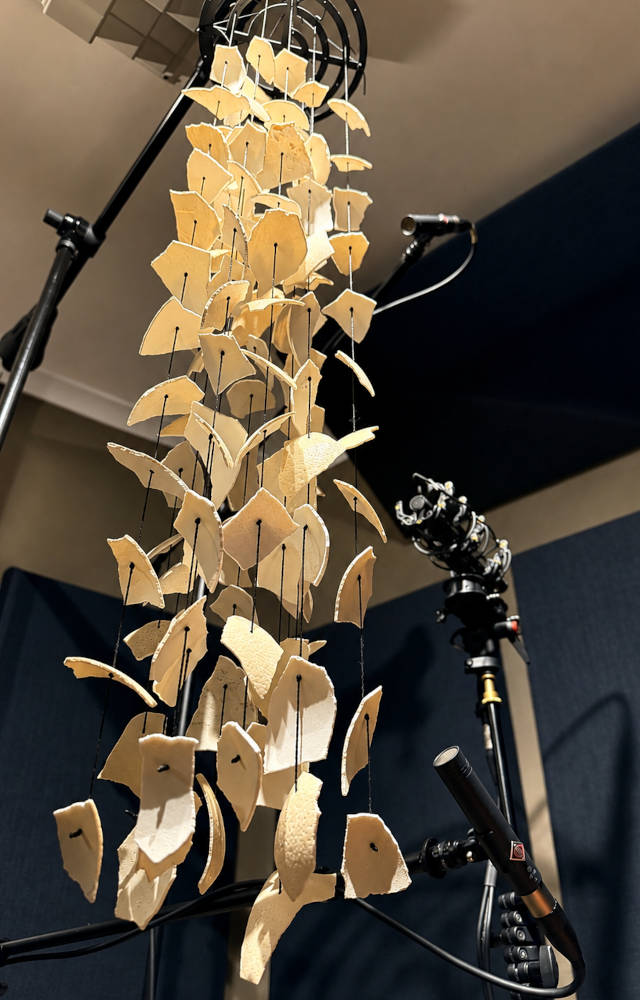
For the Origins gallery, Resonate designed and built Xaro, a new instrument made from ostrich eggshell.
The aim was not to recreate or imitate a historical instrument. It was to create a contemporary sound object from a material directly connected to the gallery’s account of early exchange.
Xaro’s circular suspension structure was designed and 3D-printed in the Resonate studio. Carefully selected fragments of ostrich eggshell were individually suspended across multiple levels, allowing them to move, collide and resonate.
The museum incorporates a preserved church within the Reserve Bank campus. For this space, composer Braam du Toit created a continuous 36-minute choral work with no fixed beginning or end.
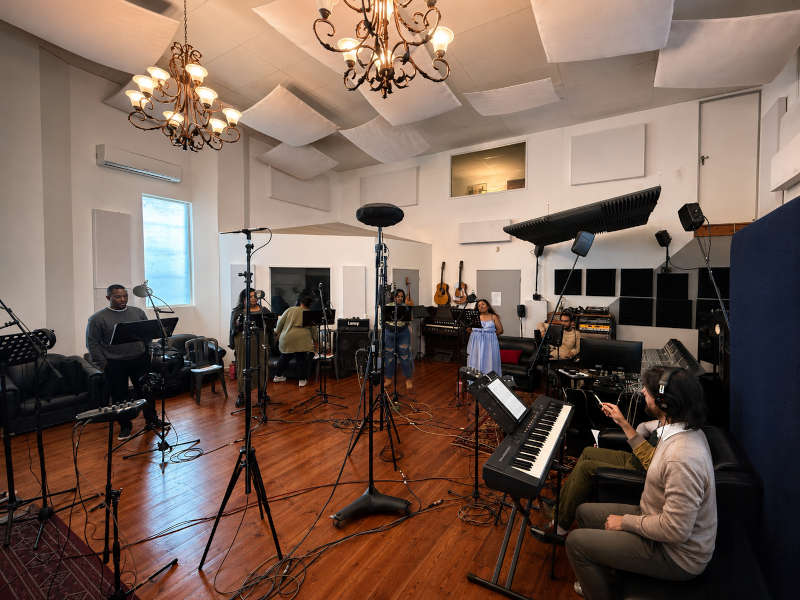
Eight South African singers were recorded in Cape Town under conductor José Dias, with support from Cape Town Opera.
The choir becomes part of the architecture. Voices move between intimacy and distance, individual prayer and collective presence, with traces of church bells, Xaro and the building’s own history woven into the work.